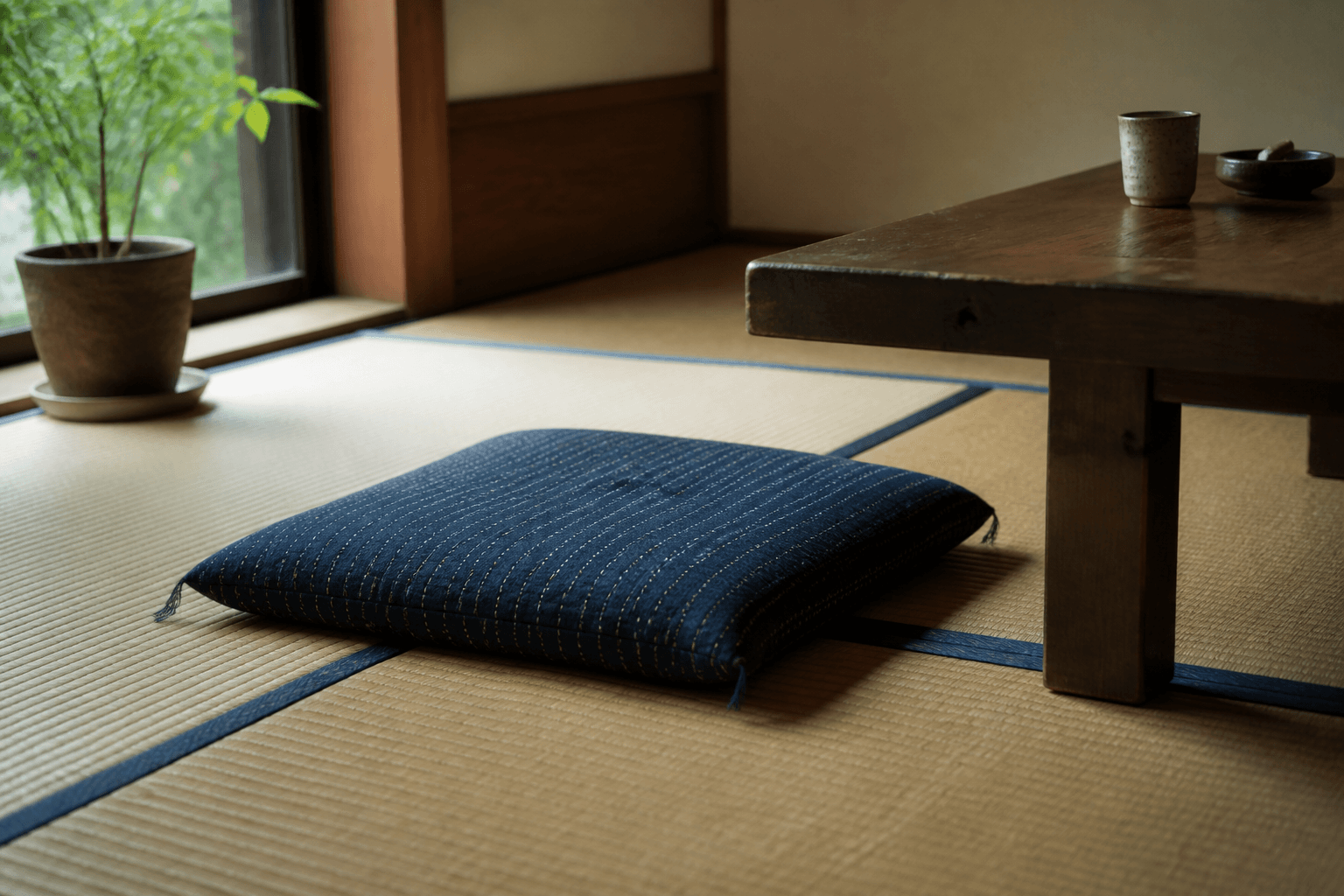
The zabuton — a flat square floor cushion, typically 55cm to 65cm on a side — developed in Japan alongside the architecture that required it: the raised wooden floor covered in tatami, where chairs had no place and sitting on the bare mat was cold and hard. The zabuton solved this simply: a double layer of fabric, filled with cotton batting, stitched around the edges.
Kyoto zabuton became distinguished by their silk or nishijin fabric covers — the same textile tradition that produced imperial kimono. The proportions were codified by tea ceremony: a zabuton placed before a master at a formal gathering communicated status, respect, and hospitality in the specific density of its cotton filling and the formality of its weave.
A traditional zabuton is filled with long-staple cotton, layered in specific directions to build the right density — firm enough to support the seated body but yielding enough not to create pressure points over hours of sitting. The cover is sewn by hand at the corners and finished with a silk cord border (beri) that defines its front edge.
The outer fabric determines everything else: a silk zabuton is formal and seasonal; a cotton one is everyday; hemp is for summer. The batting is replaced every few years as it compresses. A quality zabuton frame — the woven outer structure — can last decades with re-stuffing.