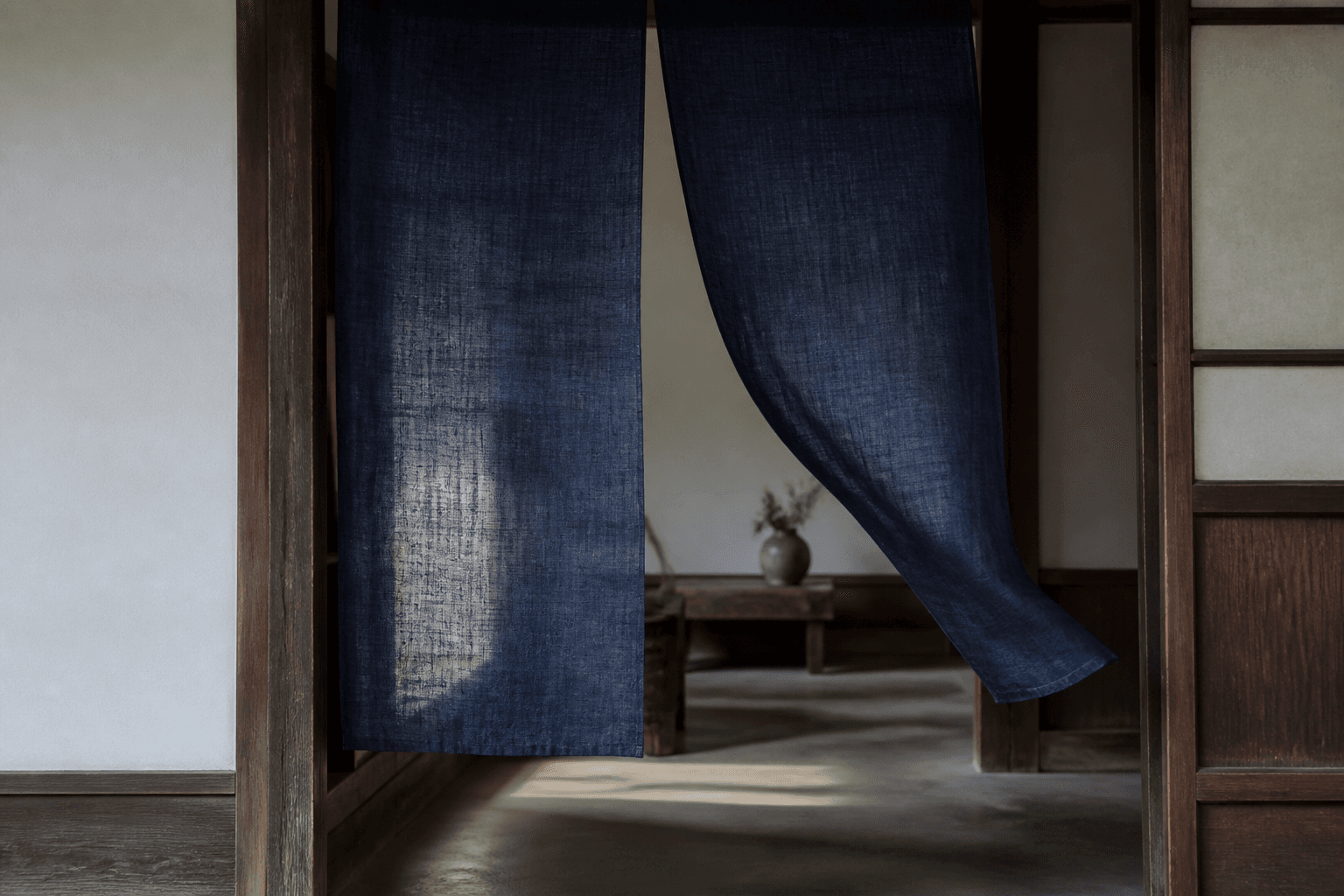
An indigo noren moving gently in a wooden Japanese doorway

Noren

/ のれん
COMING SOON · 販売準備中EDITORIAL IMAGE · SOURCING IN PROGRESS
ORIGIN

The noren is a fabric divider hung at shop entrances and room doorways across Japan. First appearing in the Heian period as protection from dust and wind, it evolved into a symbol of identity and welcome. A shop's noren carries its name and crest—to "pass through the noren" is to enter a trusted establishment. Over centuries, the noren became an art form: indigo-dyed, resist-patterned, woven with the quiet precision that defines Japanese craft.

CRAFT

Traditional noren are hand-woven from hemp, cotton, or silk. The signature split panels are not merely decorative—they allow passage while maintaining division. Dyeing techniques range from tsutsugaki (freehand rice-paste resist) to katazome (stencil dyeing). Each piece requires weeks of preparation before a single thread is dyed.

Crossover

In your world, this is the curtain between the kitchen and the hallway — the soft boundary that says "come in, but not yet." In Japan, it's a Noren. A hand-dyed fabric that carries the soul of its maker.

NEW USE

A Brooklyn studio uses a deep-indigo noren as a room divider, replacing a door that was never needed.

Hung above a bed instead of a headboard. Still, intentional, present.

Hung in a Brooklyn studio as a room divider — replacing a door that was never needed.

HOW IT LIVES

In Japan, a noren hanging outside a shop means it is open. When the noren is taken down, business is closed for the day. This small ritual — raising and lowering fabric — marks the rhythm of the working day with quiet ceremony.

KYOTO / 京都
COMING SOON · 販売準備中

This is where the object will become available.

We are confirming the real object, maker, provenance, photography, delivery, and care conditions before opening sales.

ACQUIRE · COMING SOONRead the culture & function story