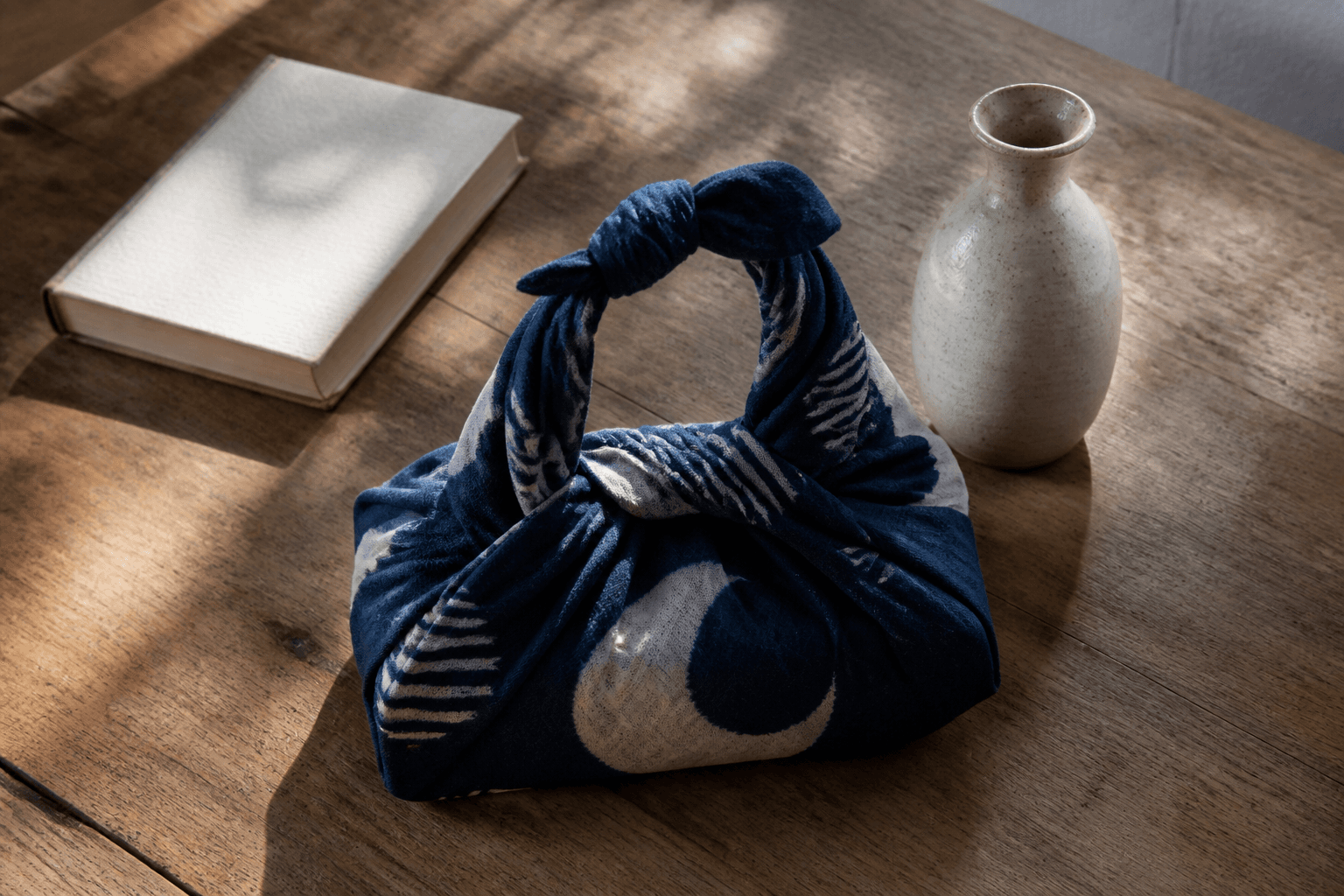
Furoshiki is a square piece of cloth with a history stretching back to the Nara period (8th century), when it was used to wrap the belongings of nobles visiting the imperial bathhouse — furoshiki literally translates to "bath spread." Over centuries, it became the everyday carry solution of Edo Japan: merchants wrapped goods, farmers carried produce, and travelers packed everything they owned into a single cloth tied over the shoulder.
Kyoto became its center. The city's weaving tradition, fed by centuries of imperial textile production, produced furoshiki in silk, hemp, and cotton — each pattern carrying regional and seasonal meaning. A crane meant longevity. Waves signaled the sea trade. The cloth was never disposable; it was folded, washed, and used again for decades.
Traditional furoshiki are woven on wooden looms, with the most prized examples made from Nishijin silk — the same fabric used in Kyoto's ceremonial kimono. The dyeing is done with resist techniques (yuzen or shibori), building up layers of color before the final rinse reveals the pattern beneath.
Modern furoshiki use cotton or rayon, making them softer and faster to dry. A quality piece is hemmed on all four sides and sized precisely: 50cm for wrapping small gifts, 70cm for a wine bottle, 105cm for carrying a bento and thermos together.