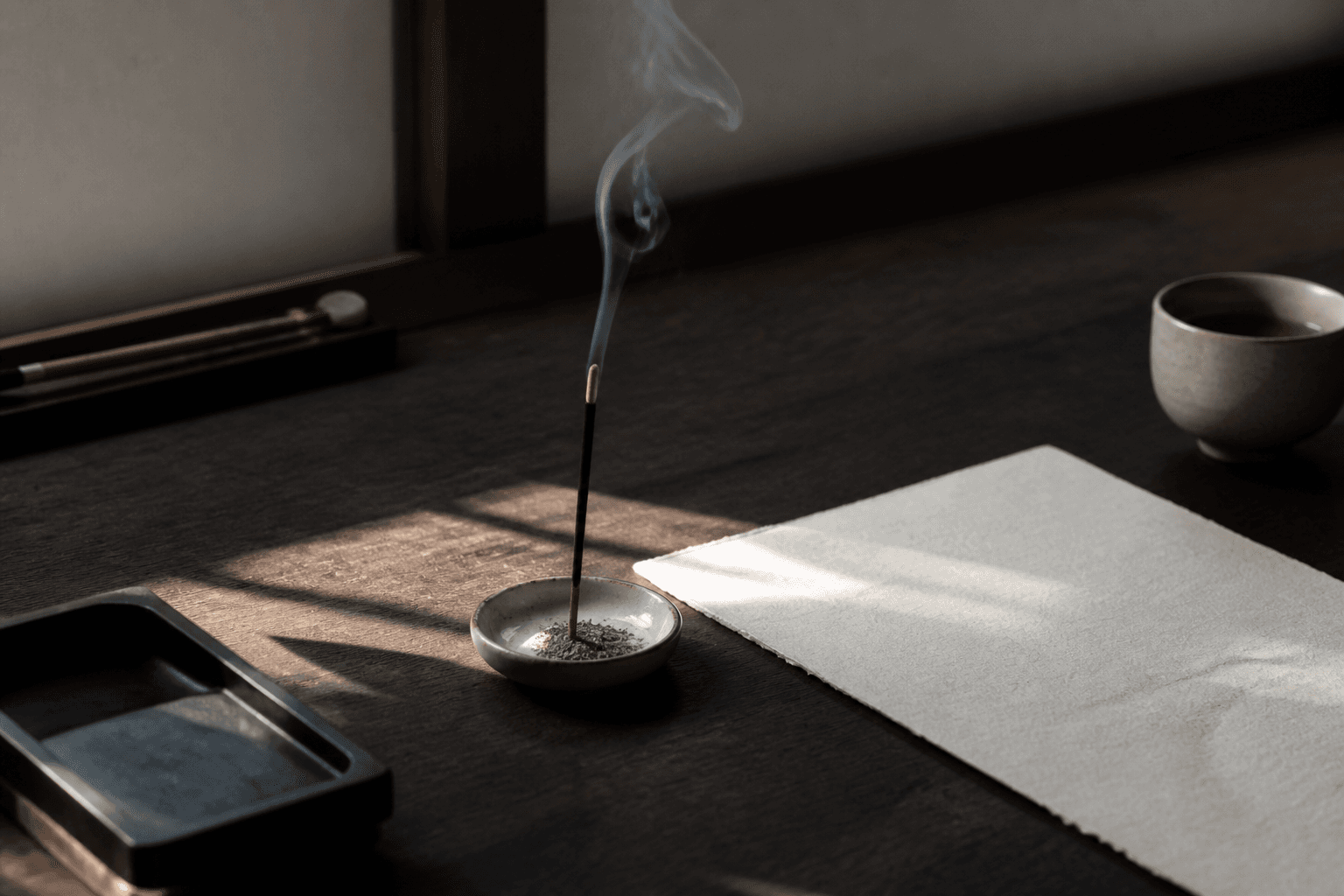
Japan has been burning incense for over 1,400 years. What began as a Buddhist ritual — carrying offerings to the spirits — evolved into kōdō, the Way of Incense: a meditative practice of listening to fragrance. In the Heian court, aristocrats competed in incense-blending. Warriors carried incense into battle to scent their armor, so that death would be met with dignity. Today, Awaji Island produces 70% of Japan's incense, its sea air and soil still carrying that ancient attention.
Koh is made from natural aromatic woods and resins — aloeswood (jinko), sandalwood (byakudan), clove, cinnamon, and star anise — bound with natural tabu-no-ki bark powder. The blending ratios are closely guarded. Master blenders work by smell alone, adjusting across seasons as the raw materials themselves change.
