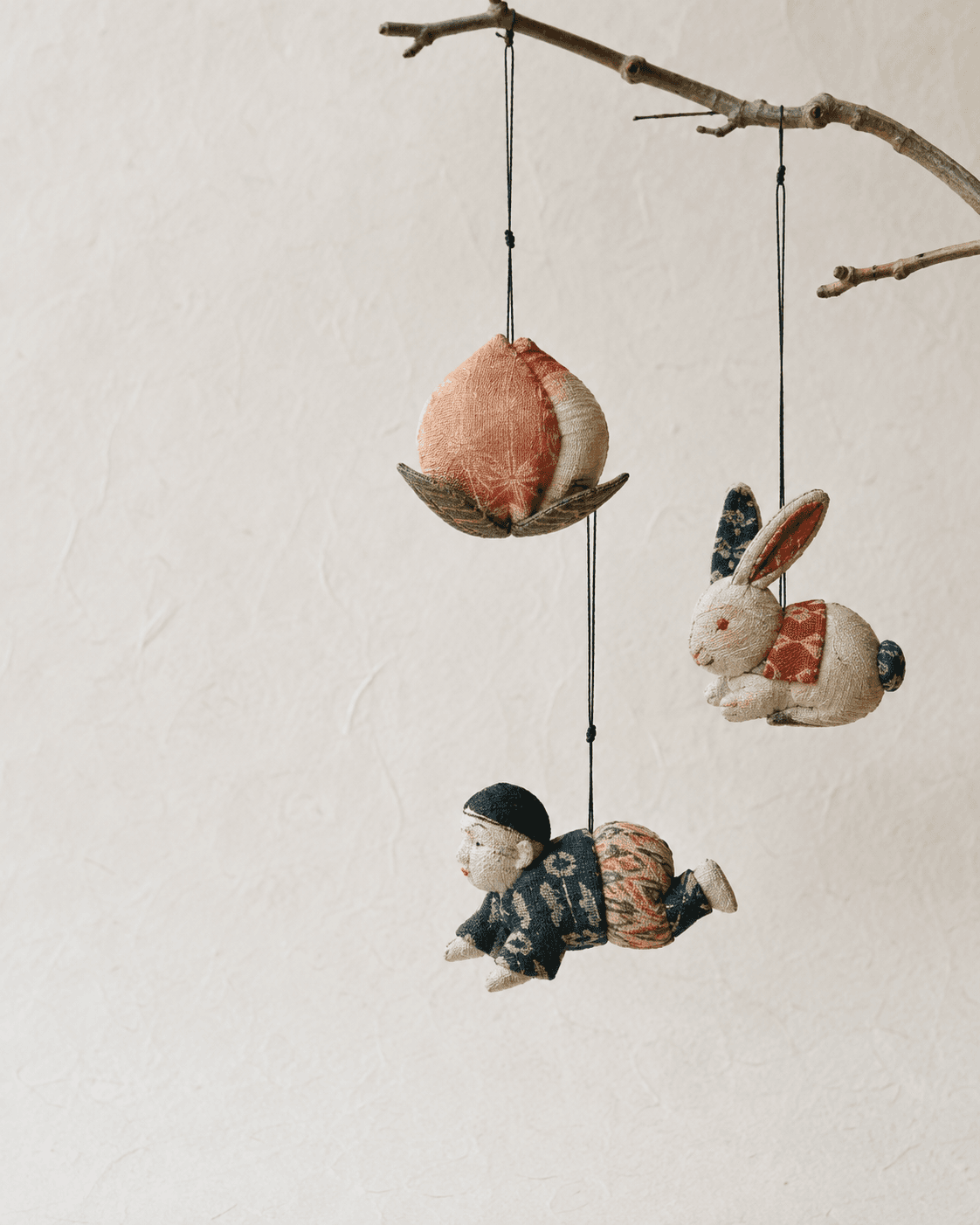
Peach / 桃
Protection from harm, and a long life.
A sewing ritual for December
🇬🇧 United Kingdom · Baby's First Christmas
Families made small wishes from the cloth they already had.
A kit for three ornaments, cut from one retired kimono.
New use · 新しい使い方
Three ornaments you sew yourself, from one retired kimono.
No machine. No sewing experience. The needle and thread are already in the kit.
Inside the parcel · 箱の中身
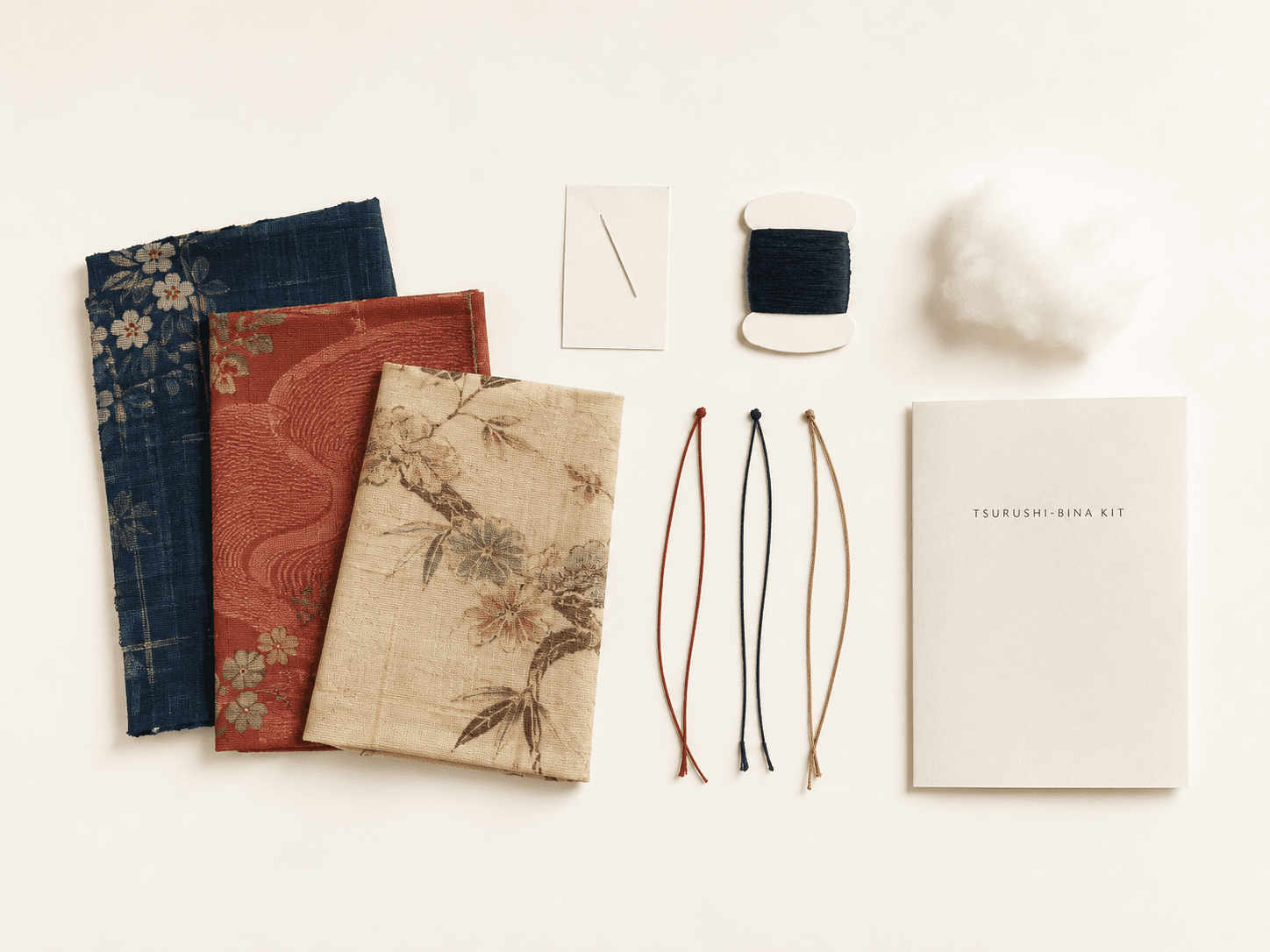
Open the parcel and begin. The only thing not in the kit is a pair of scissors.
Why the cloth is chosen at random
Tsurushi-bina began with the kimono scraps a family already had. We keep that same logic.
We wash and press one retired kimono, then cut only what it gives us. Your cloth is selected from that garment, so its colours and patterns will be a surprise. Patterns cannot be chosen.
Included in the kit
Crossover · 文化の交わるところ
You buy one on a journey. Years later, you lift it from a box and remember where you were.
Tsurushi-bina can grow the same way. Make one now. Add another later. Let each small shape hold its year.
Why they exist · はじまり
In the late Edo period, a full set of Hina dolls was beyond the reach of many homes.
Mothers and grandmothers used what they had. They cut scraps from worn kimono, sewed small forms, and hung them on thread.
It was not a grand tradition at first. It was a practical answer. Meaning gathered around it, one small wish at a time.
Each one means something · 一つずつの願い
Protection from harm, and a long life.
Saru sounds like the word for leaving. A wish that hardship will go away.
Once used to keep insects away. Also a wish to keep harmful attention away.
Its red eyes were believed to hold protective power.
A child learning to move. A wish for healthy growth.
Because every form carries a meaning, the collection never has to be finished.
The fabric was a kimono · 布の前の時間
Each kimono is found in a second-hand shop in Japan. It is taken apart, cleaned, ironed, and cut by hand.
Only as many kits are made as that garment allows. When the cloth is gone, that exact fabric is gone too.
What you will actually do · 実際にすること
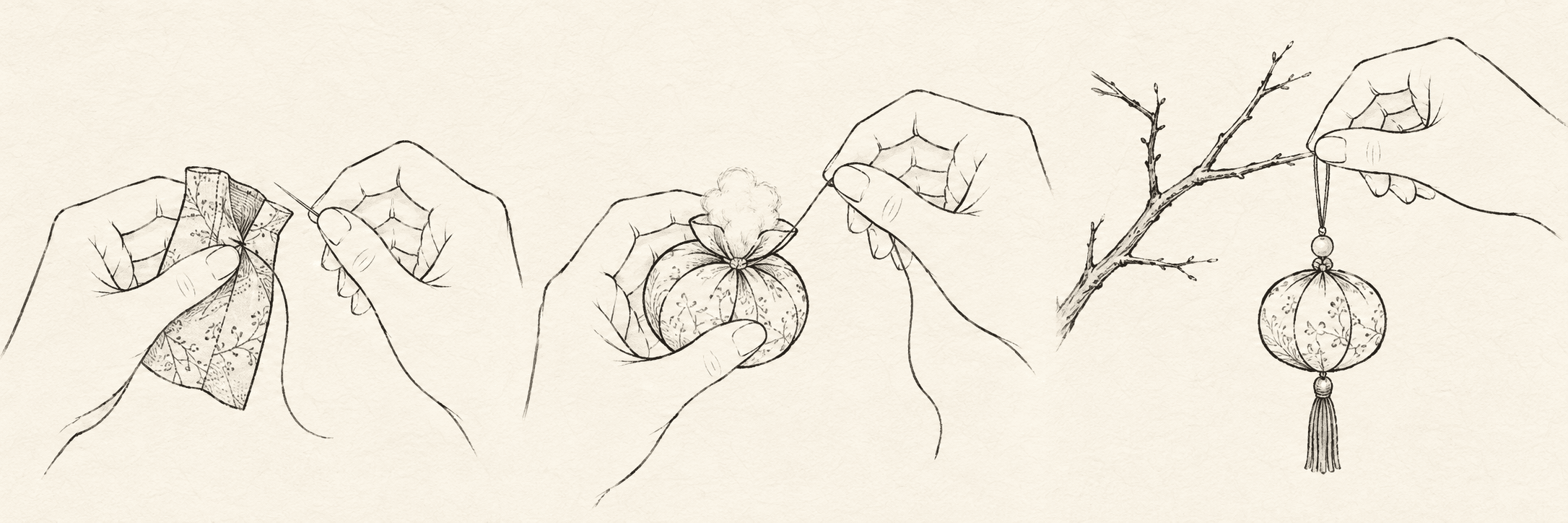
Allow about 60–90 minutes for each ornament. Stop for tea. Continue tomorrow. There is no correct speed.
Meet the three pieces of kimono cloth in your kit. No two kits begin in the same place.
Follow the printed line with a small running stitch. It does not need to be straight.
Turn the shape inside out. The rough edge and most of the stitches disappear inside.
Add the soft filling, then close the last opening by hand.
Tie the cord. Put it on a branch, a hook, or your tree each December.
Inside the kit
From your drawer
Wabi-sabi · 不揃いのままで
You do not need a machine. Your stitches do not need to form a straight line.
These figures began in ordinary homes. Mothers made them for children, not judges.
Wabi-sabi is not an excuse for a mistake. It is attention to the marks that show something was made, used, and kept.
What moved. What stayed.
Scraps of cloth. Small hand stitches. Hanging each form. A meaning held in every piece.
The month: March became December. The place: beside Hina dolls became a tree or winter branch.
Both customs already knew the same gesture: hang something small, then return to its story every year.
From one kimono · 一着から
A finite piece of cloth is simply finite. We cut what it gives us. Then we begin again with another kimono.
Make the first three · 最初の三つ
The cloth will differ from the example shown. Each kit begins with the kimono we find.
IncludedKimono cloth · needle + thread · filling · cord · English guide
You bringScissors
ClothSelected at random from one retired kimono · patterns cannot be chosen
Ships from Japan · Usually dispatches within 30 days
If demand is higher than expected, dispatch may take longer. We will email you before shipping if the timing changes.
Shipping, import duties, and taxes are calculated according to your destination at checkout.